Article contents
Write down the route you will actually take
Start with your real plans: how you will get there, where you will meet your group, which part of the event you want to visit and how you will return. Record travel in a vehicle, an indoor stop or walks between locations as separate stages where relevant.
Before choosing the complete outfit and outer garment, check the forecast for the actual location and time of your outing, together with the organiser’s latest programme. Revisit your plan if either changes.
Beside each stage, note anything that affects the outfit. Will you be sitting during the journey? Will you need to carry something you are not wearing? Is there an agreed place to leave an item, or must it stay with you? When you do not know the answer, record an open decision rather than assuming storage or transport will be available.
Include your outer garment in the outfit
Lay out everything you actually intend to wear together: base clothes, costume pieces, outer garment, shoes and bag. Check which pieces are already available and which are still just ideas. This makes the planned look correspond to clothes you can use.
Look at what stays visible with the outer garment in the position you intend to wear it. If it covers the role’s main feature, you can emphasise another colour or piece you already have, or accept a subtler version. The idea need not depend on a garment you have decided to remove only for a photograph.
When a choice depends on the fit or use of a particular model, check its own details and instructions. This plan does not replace that information with a rule about buying a larger size.
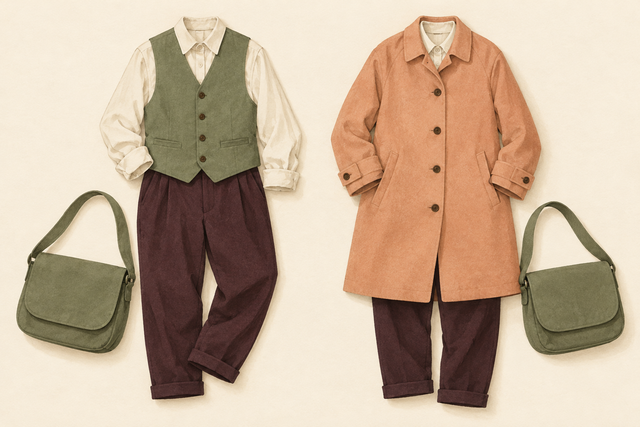
Try the pieces on together
Put on the selected outfit and bag as planned for the outing. Notice how the pieces work together during ordinary movements such as sitting down or walking around at home. Can you reach the pockets and fastenings you intend to use? How does the look change when you pick up the bag?
If something makes the planned use awkward, reconsider the combination using the pieces available. Record the specific decision needed: “choose another bag” is more useful than “something does not feel right”.
Decide what you want to carry
Separate the items you wear from those that need a hand or space in your bag. For each optional prop, consider whether you want to carry it through every stage of the route. Completing the idea at home does not make it essential to the outing.
Try putting the things you intend to take into your chosen bag. Do not leave its capacity as an assumption. If you expect to remove a piece later, decide where it will go and who will bring it home. Anything left out of the plan stays at home.
An example: the city messenger
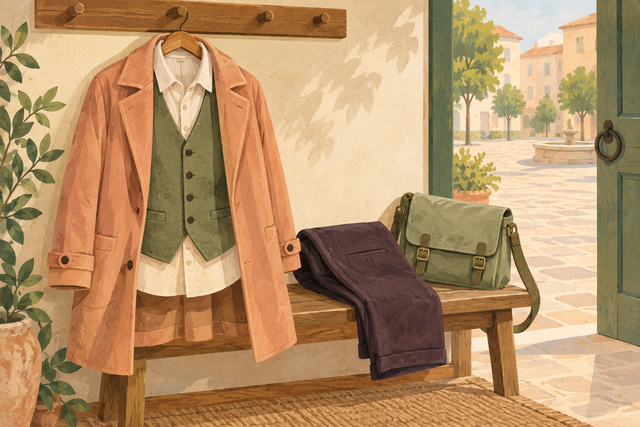
In this hypothetical example, the outing involves a bus journey, meeting in the square, a walk around the outdoor celebration and returning by bus. The “city messenger” is a creative role idea.
Assume a sage vest, ivory shirt, dark trousers, peach coat and plain bag are already available. The outfit is tried on with the coat as it will be worn. If the vest is covered, the idea relies more on the outfit’s silhouette and bag. A bulky optional decorative parcel stays at home: the wearer does not want to carry it on the journey. On the way back, the same bag holds their personal things, with no additional prop to transport.
Your own outing card
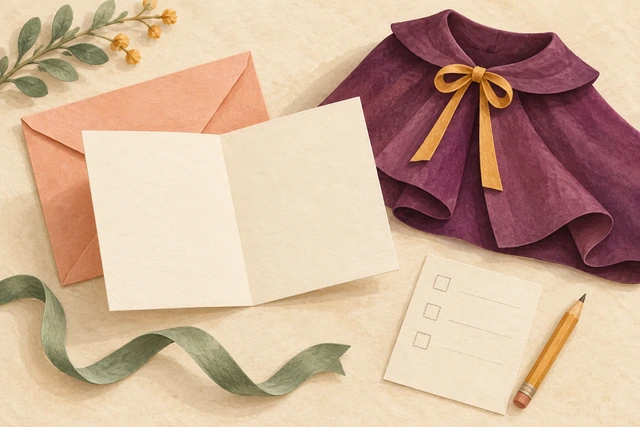
Write the costume idea and outward-and-return route above the card. Enter what you have decided and keep any unknowns visible.
| Stage or item | What I will wear or carry | Open decision or next step |
|---|---|---|
| Outward journey | … | … |
| Complete outfit at the event | … | … |
| Bag and optional props | … | … |
| Return journey | … | … |
The result is an outfit connected to your actual outing, with clear decisions about what you will carry. Fill in the card with the real clothes in front of you, then resolve each open point before gathering your things to leave.