Article contents
Use the invitation as your starting point
Write down where you are going, when you need to be there, the theme or your role, and the organiser's instructions. Add where you intend to get dressed. If you do not know whether a changing area is available, record the question instead of packing as though you already have an answer.
Separate information from the invitation from decisions you make yourself. “The performance has an assigned role” is a fact if the organiser has specified it; “I will wear only two accessories” is your choice. If the event details change, you can then identify which part of your preparation needs another look.
Turn your idea into a collection of actual pieces
Once you have chosen the look, gather the clothes and accessories you plan to use. Sort them into “owned and located”, “missing” and “undecided”. “It is somewhere at home” stays unresolved until you find the item and look at its condition.
For each missing piece, decide whether it is essential to your version or something you can leave out. A possible purchase is not an available part of the outfit. Keep anything you do not yet have in your hands on the unresolved list. Gather the items you actually have for the try-on, including the shoes and clothing you intend to wear underneath.
Rehearse the whole outfit
Try the pieces together in the way they are intended to be worn. Follow the particular item's instructions for fitting and fastening. Work out the order of dressing and whether you need help with a closure. If someone will help you at the event, agree on that specific step.
Check ordinary movements you expect to make, such as sitting down or raising your arms, and note anything awkward. When preparing with a child, listen to their description of what they want to keep or remove as well.
Record a definite result: “keep this belt” or “this accessory does not work for me”. If you change a main piece, try the combination again. Do not assume the earlier check also covers the revised outfit.
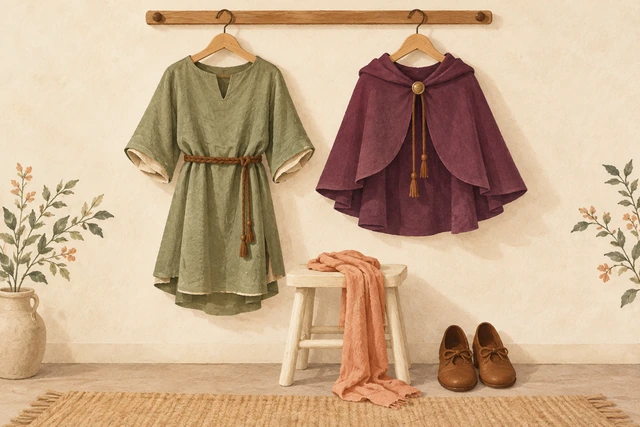
Pack for the order in which you will use things
Decide what you will wear when you leave and what you will carry. Keep separate accessories with the garment they belong to so you can account for the complete outfit. If several people are preparing, make a separate list for each look.
Choose a bag or case you already own that accommodates the pieces without forcing them into an unsuitable shape. Follow any transport or storage instructions supplied for a particular item. Also decide where the clothes you take off will go if you are changing at the venue. An item you put on last may need to be easy to reach rather than buried under everything else.
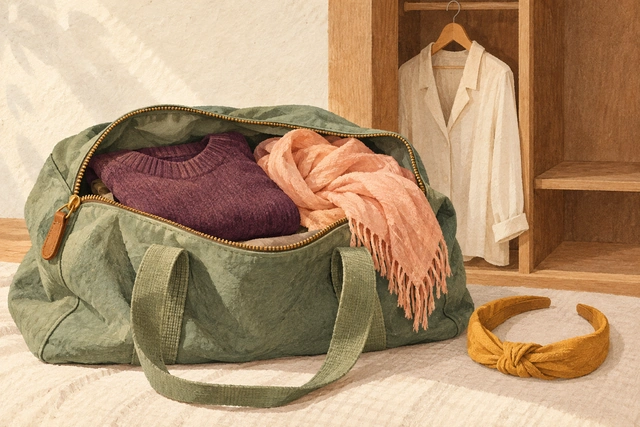
Resolve the loose ends and keep a simple fallback
For your final check, compare the outfit you will wear and the contents of your bag with the list from the try-on. If you took something out of the bag to check it again, confirm that it is back. Resolve any event details you previously left open, too.
Put together a simpler version using only what is already available. It could be the outfit without an optional accessory or another combination you have already tried. Check that it still meets the event instructions. If it is for an assigned role and you are unsure, ask the organiser to clarify.
Your fallback does not need its own shopping list. It needs a clear answer to “What will I wear if this piece is unavailable or I decide not to use it?”.
A planner you can make your own
Use the table as a worksheet. In the final column, write “ready” or a specific unresolved task with its next action. If you are sharing the preparation, add who will handle it. Set your own dates according to the event and what you can realistically do.
| Stage | What I need to establish | Status / next action |
|---|---|---|
| Event information | Theme, place, time, instructions and changing arrangements | __________ |
| Gathering pieces | What I have located and what remains unresolved | __________ |
| Try-on | The combination I will wear and any help needed | __________ |
| Packing | What I wear, what I carry and where each piece goes | __________ |
| Fallback | A workable version using things I already own | __________ |
| Final check | My list matches what I am taking | __________ |
For example, “sort out the accessories” is vague. “Find the belt and try it with the garment” is an action you can complete. When something changes, return only to the stages it affects.
Fill in the planner and choose one unresolved task you can deal with now.