Article contents
Start with the basic garment format
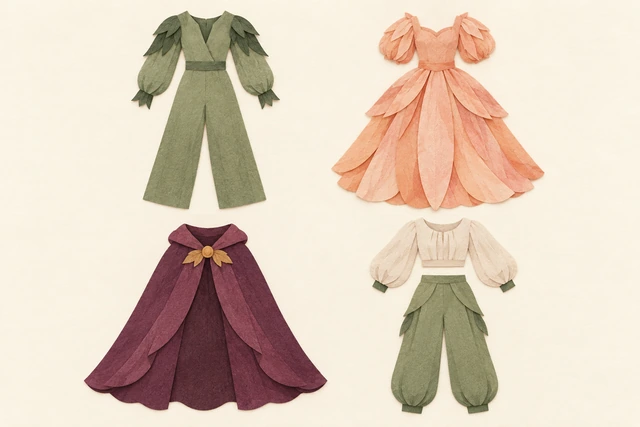
Look at which parts are joined and which are worn separately. A belt that looks sewn on in a photo may need clarification in the description. The same applies to a top that appears separate but is part of a single garment.
| Format | What it describes | What to check in the design |
|---|---|---|
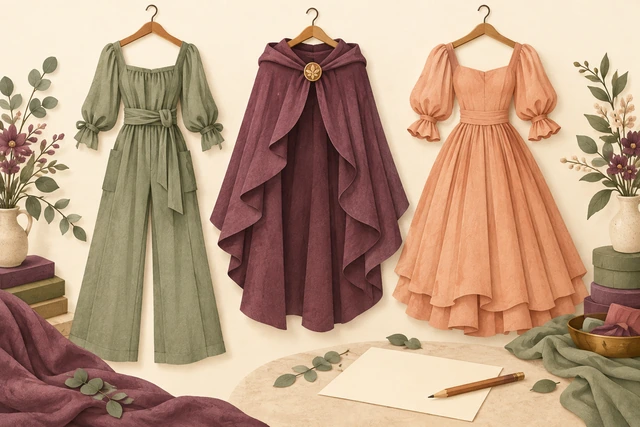
| Jumpsuit | A top and trouser legs joined in one garment | Where it opens for dressing |
| Dress | One garment with a skirt section | Where the opening is and how it closes |
| Cape | A garment falling from the shoulders | Where it is supported and how it attaches |
| Separate pieces | Parts worn independently | How they connect or overlap |
The table offers questions, not a ranking. Two designs of the same format can have different openings and attachments.
Locate the fastening you will actually use
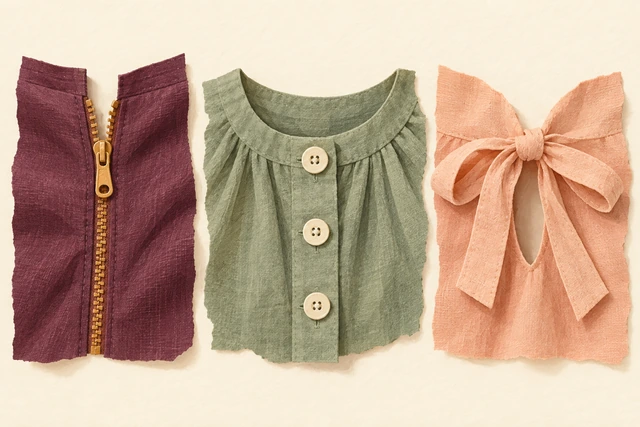
Note both the type and the position of the closure: for example, a front zip, back buttons or a side tie. The word “zip” alone does not tell you where you will reach it or how far the garment opens.
Check whether another piece covers the fastening and needs to come off first. If you plan to get ready without help, the useful question is “where exactly is the closure and how do I operate it?”. A front position alone does not guarantee that a particular fastening will suit you.
When the detail is neither visible nor described, keep it as an unanswered question. Ask about that specific design instead of filling the gap with information from a similar costume.
Think of changing clothes as a sequence
Describe where you will get dressed: at home before leaving or at the venue. Then list which parts need to be put on, fastened or tied separately. Include the detachable details you actually intend to use.
If you will change part of your look during the day, check what that change requires. Can you remove just the outer piece, or does something else need unfastening first? Where does a jumpsuit open for changing? With separate pieces, what holds each part in place?
Fewer pieces do not automatically mean fewer steps. Use the description of the dressing process rather than assuming that one particular format is always simpler.
Check how it works with your other clothing
Note what you want to wear underneath or over the costume and look for the specific item’s instructions for that combination. Will one garment cover another’s fastening? Will a collar or sleeves need to pass through another piece? Check whether the instructions describe which garment goes on first.
With two separate pieces, check where they meet: at the waist, under a belt or at a designated connection. With a cape, find out how it attaches over the rest of the outfit. Do not assume that every component can be adjusted independently just because it looks separate.
For size, use the model's own chart and instructions. Planning to wear another layer is something to check, not a reason to add your own allowance or automatically choose a larger size.
Compare two actual options against the same need
Choose the detail that matters most to you and check it in both designs. If you want to remove an outer piece during the event, look for its attachment and the order of removal. If you will dress without help, examine the location and operation of the closures.
A comparison example: when choosing between a jumpsuit and a costume with a separate top, the word “separate” does not tell you whether the top comes off without undoing the belt. That is the specific information you need.
Mark something “known” only when you have confirmed it in the item's description or instructions. If a crucial detail is missing, leave the comparison open until it is clarified.
Your personal construction checklist
Copy this card for each costume you are considering. Connect each construction detail to something you need in practice.
| Detail | My notes |
|---|---|
| Exact costume and basic format | ______ |
| Where I will dress and available help | ______ |
| Closure: type and exact location | ______ |
| Pieces I handle separately | ______ |
| What I need to remove or change | ______ |
| Other clothing and points of overlap | ______ |
| Detail still to clarify | ______ |
Under the card, complete this sentence: “This construction meets my need for ___ because I have confirmed ___.” If you cannot fill in the second gap yet, write the question that will resolve it.
Complete one card for your choice and clarify the crucial missing detail before deciding.