Article contents
Start with the outfit you actually wore
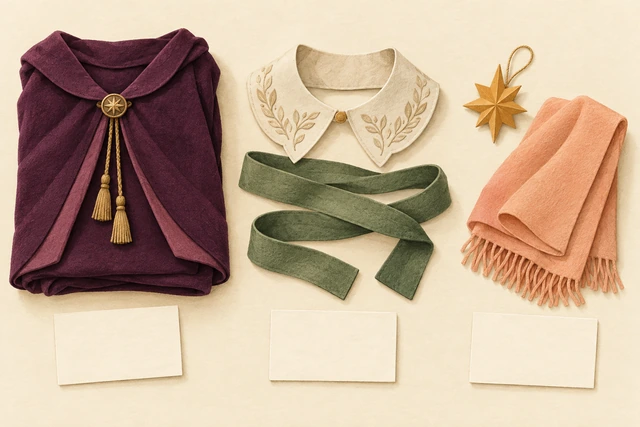
After the event, work through your own list: the main garment, separate pieces, accessories and everyday clothing you added. Compare what you find with your preparation notes or an existing photo, if that helps. Do not assume everything came in the same package.
Give the set a name you will recognise, such as “plum cape with a star”. List two similar pieces separately instead of writing “assorted accessories”. If something is not in front of you, record its location as unknown or mark it missing. Remembering that you took it to the event does not confirm where it is now.
Separate your belongings from items to return
For each piece, note whether it is yours, borrowed or shared with another outfit. For borrowed items, add the owner and the return arrangement you have agreed. Keep only the information you need to identify the item; contact details are not required on the card.
Until an item has been returned, write “return pending” and its actual current location. Once you hand it back, change the entry to “returned”. Do not leave it recorded as available with your own belongings.
A complete inventory does not mean you have every piece available for the next occasion. If you want to use a returned item again, you will need to arrange that separately.
Keep instructions and unfinished tasks in the record
Before deciding how to store each item, read its own labels and instructions. Keep them with the item or record where they are on the card. The main garment's instructions do not replace those supplied with a separate accessory.
If an item needs cleaning or other care, follow the manufacturer's instructions for that specific piece. If they are missing or unclear, write “clarification pending” and the information you need.
Also record specific observations, such as “detachable piece not found”. “Needs checking” on its own does not explain what still needs to be done.
One set can have more than one storage location
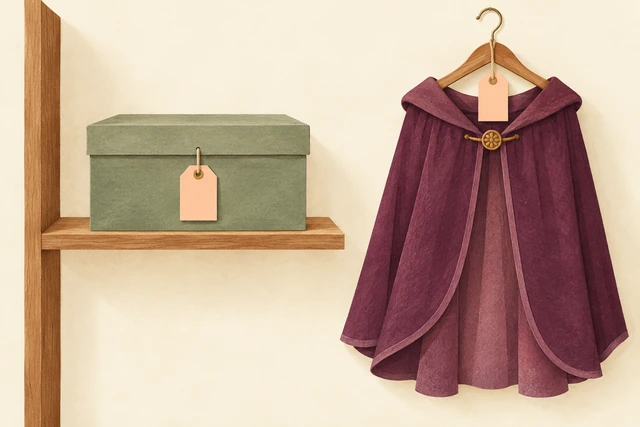
Once you have chosen an appropriate location for each item according to its instructions, describe the location so you can find it. “Bedroom wardrobe, box on the top shelf” is more specific than “in the wardrobe”. If a garment is stored separately from its accessories, record both locations.
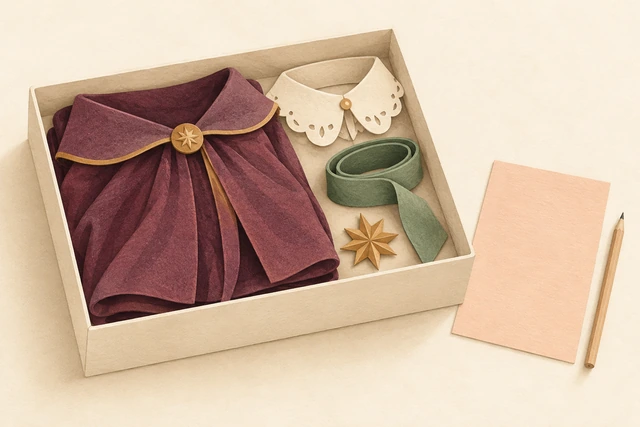
A sample inventory: the cape has its own place in the wardrobe, the belt is in the set's box and a scarf used with other outfits is in the scarf drawer. The card connects those places.
For a shared accessory, keep one current location and record it on each relevant set card. If it moves, update the records that mention it.
The card that keeps the set connected
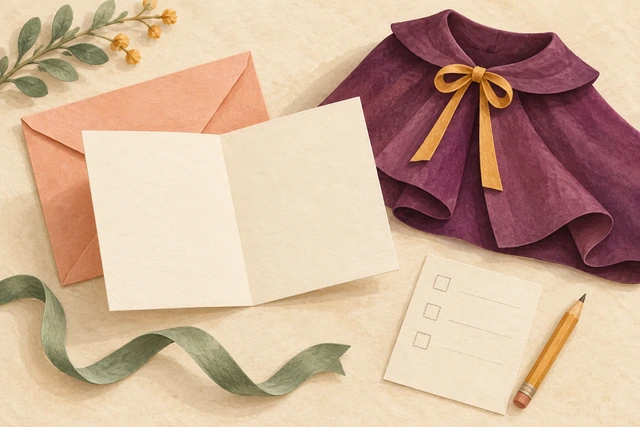
Copy the two tables onto paper or into a personal note. Add as many rows as you need.
Set name: ______
Date recorded: ______
Where labels and instructions are kept: ______
Use the same piece name in both tables.
| Piece | Location now | Owner |
|---|---|---|
| ______ | ______ | ______ |
| ______ | ______ | ______ |
| ______ | ______ | ______ |
| Piece | Status | Next action |
|---|---|---|
| ______ | ______ | ______ |
| ______ | ______ | ______ |
| ______ | ______ | ______ |
Use clear status descriptions:
- Located: you found it in the place recorded.
- Pending: a specific action remains, such as clarifying instructions or making an agreed return.
- Missing: you are looking for it; do not enter a guessed location.
- Returned: it has gone back to its owner and is no longer with your set.
You can optionally keep a private photo of just the items and note where you saved it. The photo can help you recognise them, but it does not replace the written list or location updates.
Next time, start with the card
Keep the card in a known place with the set's records, and note its main storage location somewhere you will easily find it. If the set moves, update the card when you move it.
Before the next use, work through the rows: are the pieces still there? Have the pending tasks been completed? Will you need a borrowed item again? Check the actual condition and fit of the items you intend to use afresh. An old inventory shows you where to look; it does not mean the costume is automatically ready to wear.
Complete one card for your set now, with the actual location and next action for every piece.