Article contents
Identify what defined your first look
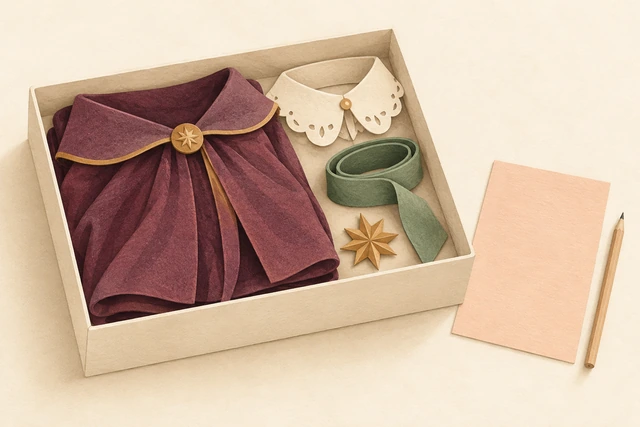
Start with the costume as you wore it to the previous event. Note the garment that formed the base, the colours that stood out and the accessory that suggested the role. A photo of your own outfit can help, but a short description is enough.
Separate “I liked this and want to keep it” from “this made the look specific”. You might want to keep the cape but leave out the large star that connected the outfit to the night sky. That makes the change concrete instead of simply giving the same arrangement a new name.
Also note any theme or restriction for the second event, as it has been given to you, before developing the new idea.
Choose the base you want to keep
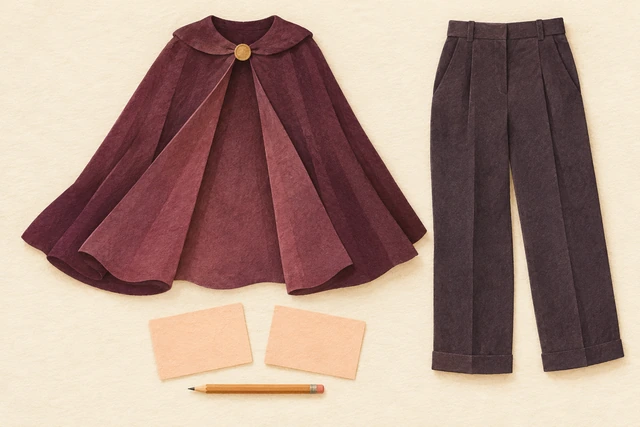
Keep one or two specific elements from the previous costume: for example, the cape and trousers, or the main dress. The choice is yours; you do not have to retain everything you wore the first time.
Confirm that those pieces are actually available to you. An accessory you borrowed is not available merely because it appears in the old photo. If something is missing or has an unresolved issue, note that before building the second look around it.
Look at the construction and instructions of the specific items when considering new combinations. The fact that two pieces have been worn separately does not confirm that they work together as you imagine.
Change the detail that tells the story
Choose a new direction first, such as “from night-time storyteller to woodland traveller”. Then identify the visible change that will express it: a different top, another colour near the face or a different prop associated with the role.
You do not have to keep adding things. Removing the feature that dominated the first look can be part of the new plan. Write down what leaves and what takes its place.
Work with different combinations of available pieces. If an idea requires changing the construction of an item itself, look for another version of the idea that uses the pieces as they are.
One base, two specific looks
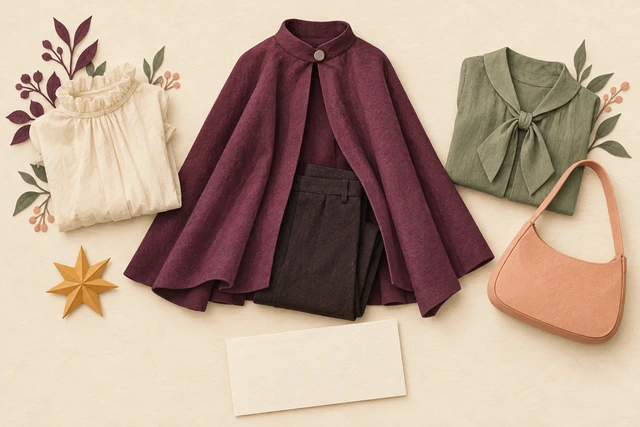
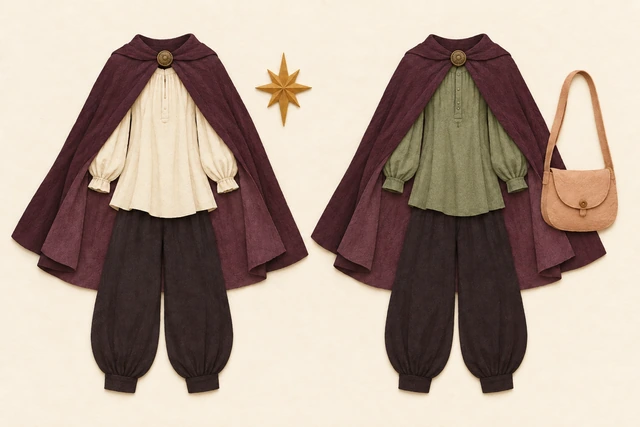
A hypothetical example: you have worn a plum cape, cream top and dark trousers while holding a decorative star. You also have a green top and a plain bag available. You plan the two versions like this:
| Element | First look | Second look |
|---|---|---|
| Role | Night-time storyteller | Woodland traveller |
| Base retained | Plum cape and dark trousers | The same cape and trousers |
| Top | Cream top | Green top |
| Role prop | Star held in the hand | Plain bag, without the star |
| Colour emphasis | Cream and gold | Green beside plum |
Two specific changes create the difference: the top shifts the colour emphasis, and the bag replaces the star as a clue to the role. The cape remains recognisable. Before adopting the combination, check how the cape, new top and bag are worn together.
Separate a genuine gap from an optional addition
For each new element, ask: do I own it? Can I actually use it at the second event? Is it essential to the new look, or would I simply enjoy adding it?
In the example, if the green top and bag are available and the combination has been checked, no additional piece has emerged to look for. If the bag is missing, consider whether you want to keep the idea without it or record a specific need. Do not automatically add a hat, belt and more accessories just because the role has changed.
An unknown detail about how pieces combine is a question to clarify, not necessarily a shopping gap. Keep it separate from items that are actually missing.
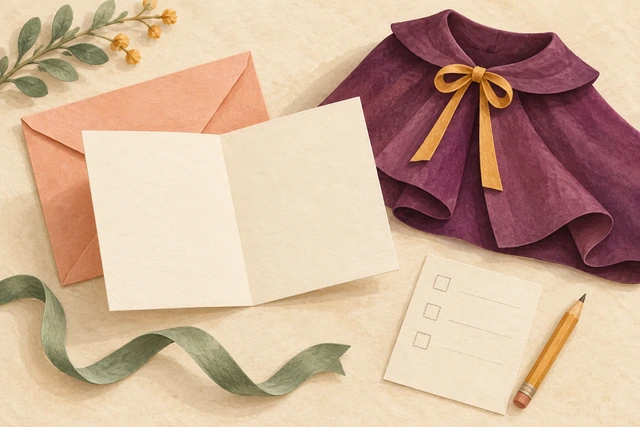
Your second-look planning card
First describe the new direction in one sentence: “I want to move from ___ to ___ while keeping ___.” Then fill in the table for your actual pieces.
| Keep | Change | Check |
|---|---|---|
| Main garment: ______ | Top or colour emphasis: ______ | Available for the new date: ______ |
| Second base piece: ______ | Role prop removed or added: ______ | Pieces to check together: ______ |
| Detail I want to remain recognisable: ______ | Another specific difference: ______ | Genuine gap or unanswered question: ______ |
Put the two descriptions side by side. Can you name what will look different? If not, reconsider the element you are changing. If you can, retain only what contributes to that difference.
Complete the card and settle on your second look using the pieces you have confirmed.