Article contents
Start with clothes you can actually use
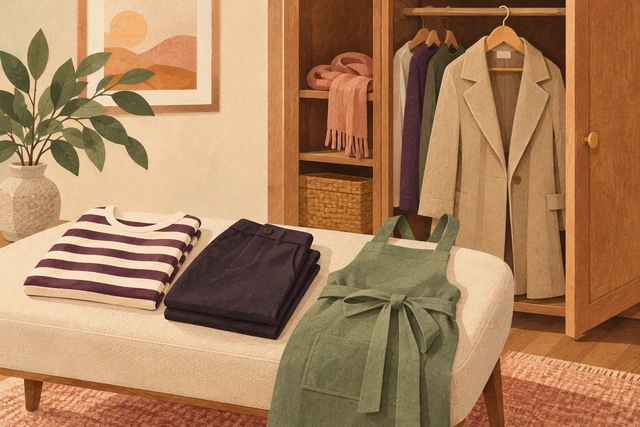
Take out a small selection of clothes that are available and that you want to wear. Look at them outside the wardrobe, alongside the shoes you are considering. Check that they fit and are ready to use. An item you remember owning but cannot find, or that no longer fits, is not yet a usable base.
Note three simple features for each piece: colour, shape and a distinctive detail. For example, “beige, long, with a collar” says more about what a coat might contribute than “my old jacket”. Look through hats, waistcoats, aprons and scarves you already own too, without assuming you need them all.
Choose the piece that gives the outfit direction
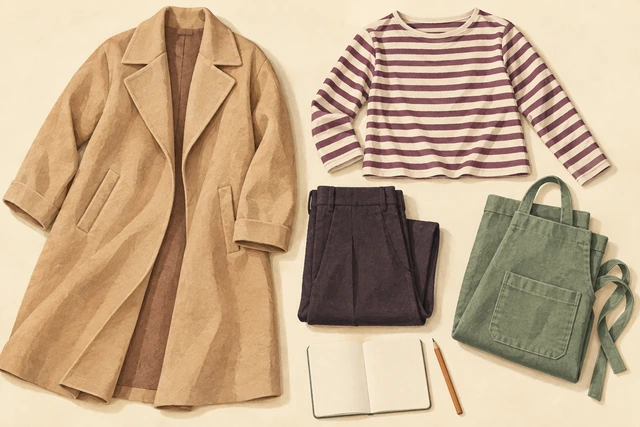
Which garment suggests an idea first? A long coat, striped top or apron can become the starting point for your interpretation of a role. The “anchor piece” means the item you organise the look around, not necessarily the largest or most expensive one.
Give the outfit a short name, such as “detective” or “gardener”. Choose the remaining pieces with that name in mind. If two garments suggest different stories, follow one for now and see what you can put together. Every good idea does not need to appear in the same outfit.
Three starting points using everyday clothes
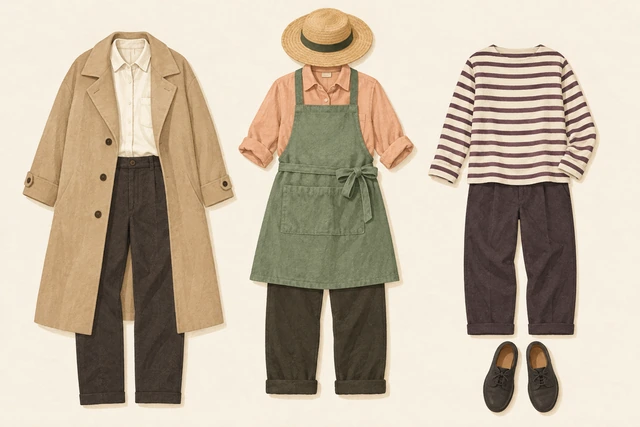
These combinations are hypothetical examples to get you started. Use them where they match what you own and the look you want.
- Detective: a long beige coat over a plain shirt and dark trousers. A hat you already own can join the outfit if it suits your interpretation. The coat’s shape is the starting point.
- Gardener: an apron over a shirt and trousers, with an existing hat if you like it in the combination. Keep the apron as the defining element and consider whether the outfit conveys the role you have in mind.
- Mime: a striped top with dark trousers and shoes you already have. Begin with that simple contrast and decide whether you want another detail from your wardrobe.
The examples offer directions, not a single correct outfit for each role. If you do not have the defining piece, try another idea built around something you own.
See what the outfit suggests when worn
Put the pieces on together and look at the whole outfit, not just individual items. What catches your eye first? Do the other pieces support the same idea? Temporarily remove a detail that feels confusing and compare the two versions.
You can ask someone “What role does this outfit suggest?” before telling them its name. Their answer is a useful opinion, not a guarantee that everyone will read it the same way. If the idea needs a long explanation, see whether you already own a more distinctive piece. Also check the combination while sitting and walking for the occasion you have chosen.
Separate a missing element from a possible extra
Only after trying the outfit, write down the specific unresolved point. “I want something that makes the role clearer” identifies a problem; “I need more accessories” does not explain the gap.
For each possible addition, note what it changes about the look. If the outfit already works for you without it, keep it optional or leave it out. If it is essential to your idea and you do not own it, decide whether to look for it or return to another concept based on your existing clothes. Do not count an item as available until you have confirmed it.
Turn the clothes into an outfit with this worksheet
Write the idea’s name and the occasion above the table. Add one row per piece. In the last column, choose a specific action: “keep”, “try together”, “leave out” or “look for”.
| Piece I own or am missing | What it adds to the idea | My next action |
|---|---|---|
| __________ | __________ | __________ |
| __________ | __________ | __________ |
| __________ | __________ | __________ |
| __________ | __________ | __________ |
If a row has no clear contribution to the idea, reconsider whether it is needed. Keep unresolved items visible so they are not confused with pieces that are already ready.
Complete the worksheet for one costume from your wardrobe and keep the combination that expresses your idea most clearly.