Article contents
Choose activities that actually apply to you
Think about what you will do on this outing: sit at a table, stand and chat, write during a game or carry personal belongings. Keep a few real activities rather than listing every possible movement.
Turn each activity into a simple action you can observe. “I’ll sit down for a game” becomes “I sit, place my hands on the table and use a pencil.” That gives you a clear question: does the outfit work for me while doing this?
You do not need to recreate the whole event. Choose what matters to your own plans.
Wear the pieces as you intend to use them
Combine the costume with the clothes you intend to wear underneath, your chosen shoes and the accessories you plan to use. Include your bag or any object you will carry.
An outfit without the bag may leave your hands available in a different way from the final combination. It is useful to observe the whole arrangement rather than each piece in isolation.
Use fastenings and adjustments according to the specific model’s instructions. If a piece is missing, record that the complete-outfit check remains unfinished. What you observed applies to the combination you actually wore.
Try ordinary movements without forcing the garment
Walk normally in a familiar space, sit down and stand up from your chosen seat, or pick up a personal item you expect to need. Try only the actions connected with the activities you listed.
Notice whether you repeatedly need to lift part of the outfit, move an accessory or change how you hold something. A specific description is more useful than “It feels a bit awkward.”
There is no need for vigorous movements, pulling fabric or trying to prove that something can withstand strain. If an action is difficult or uncomfortable, stop and record what happened.
Change one thing and notice the difference
Choose one observation and a matching change: leave out an optional object, agree that someone else will carry something, or use a different accessory you already own. Keep the other conditions the same.
Repeat the relevant simple action and note whether the change works better for you. Changing every piece at once makes it harder to tell what made the difference.
When the issue concerns a dimension or fastening that remains unclear, look for the model’s information. An improvised alteration does not need to become part of this check. The next decision can be to obtain the missing detail before settling the outfit.
A hypothetical example with a seated game
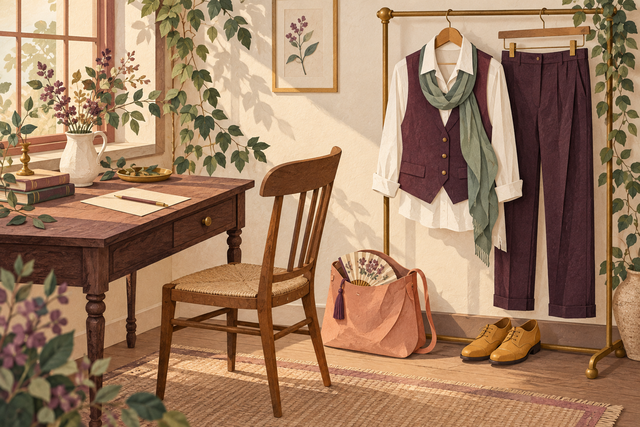
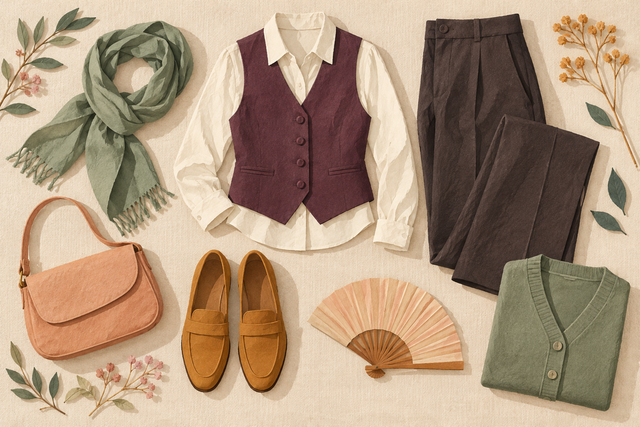
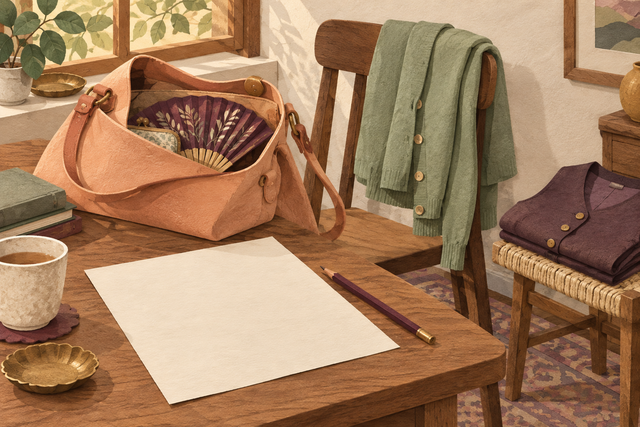
Imagine preparing for a themed evening with a seated game involving written answers. You have chosen a shirt, waistcoat, trousers, scarf, shoes, bag and an optional decorative folding fan. You also have a cardigan of your own available.
| Activity | What I noticed | Next decision |
|---|---|---|
| Sitting at the table | In this try-on, the waistcoat pulls and makes sitting awkward. | Stop, replace the waistcoat with my own cardigan and repeat the ordinary sitting action. |
| Sitting and writing | I am holding the fan while needing that hand for the pencil. | Put the fan in my own bag during the game. |
| Writing again after this change | I can use the pencil without holding the fan. | Keep this arrangement for the game. |
The waistcoat and fan are considered separately so you know which change addresses each observation. Assess the cardigan with the same simple action before deciding to wear it. These choices use pieces already available and your own bag.
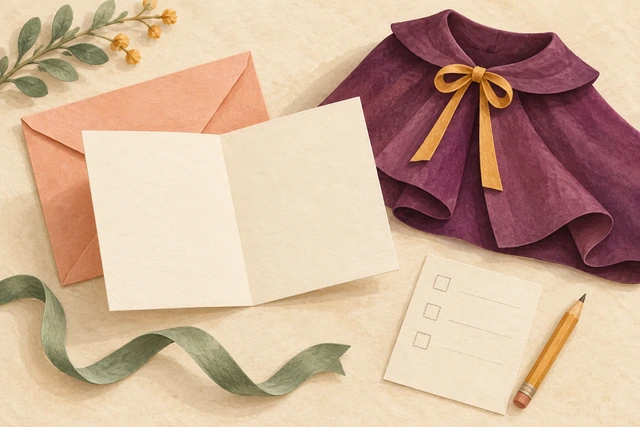
Keep a short observation card
Use one row for each activity that matters to you. Describe what happened instead of assigning the costume a score.
| Activity | What I noticed in the complete outfit | Next decision |
|---|---|---|
| … | … | … |
| … | … | … |
| … | … | … |
The decision might be “keep the combination,” “remove the optional accessory” or “get information about this detail.” If the outfit changes, revisit only the actions affected.
Your next step: complete the card with the real movements of your outing and one specific decision for each observation.