Article contents
Clarify the intended look for the role
Ask for the actual brief for this role: the intended look, any specified colours or elements, and what the family can choose. The role’s name alone does not describe what the person leading the production has planned.
Distinguish an agreed direction from an idea awaiting an answer. If you suggest a garment you already own, describe that particular item and ask whether it fits the intended look. Avoid buying a defining piece while the requirement is unclear. Also establish who is collecting questions about costumes.
List the pieces for each appearance
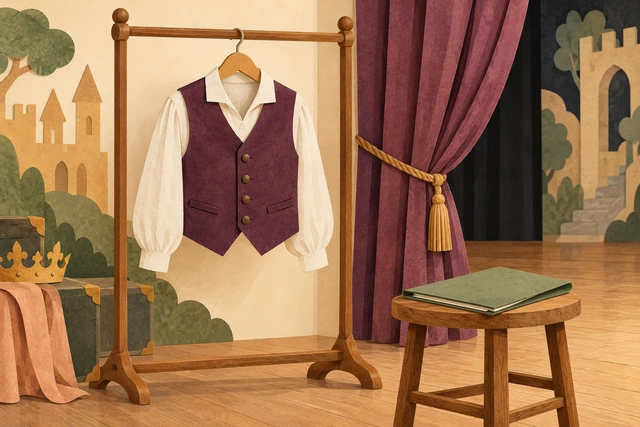
Go through your child’s scenes together, using the version being rehearsed. For each appearance, write down the exact pieces: the main garment, an outer layer or an agreed accessory. Use descriptions that distinguish the items, such as “green waistcoat”, rather than the vague phrase “the costume”.
Note whether a piece stays on for the next scene or needs to be handed to another child. Do not add changes because the role reminds you of a different production. If no change has been decided, write “same outfit” and confirm it with the person in charge.
Use rehearsal to identify specific questions
Ask which rehearsal requires the actual costume pieces and follow the school’s arrangements. When they are used, notice practical points with your child: whether they recognise the correct piece, remember what to leave and what to take, and know where help is needed.
Follow the manufacturer’s instructions for using each item. If a difficulty arises, describe it to the person in charge and agree how to revise the plan or choice.
Agree the sequence and help for every change
For each planned change, record what comes off, where it is handed over and what goes on next. Use a scene or an agreed cue as the reference point. A cue might be a particular line identified by the person leading the production. Do not invent timings or cues that have not been tried within the rehearsal arrangements.
Confirm both the changing location and the person helping. Writing someone’s name on your list does not mean they have agreed to the task. If the scene order changes, revisit the affected transitions and give the updated worksheet to everyone involved in the costume changes.
Give borrowed pieces a clear route home
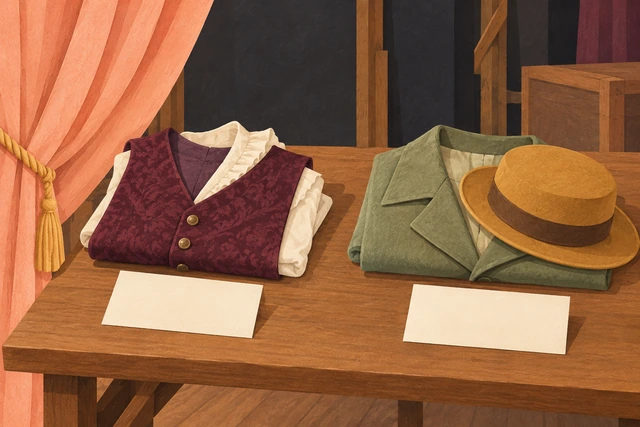
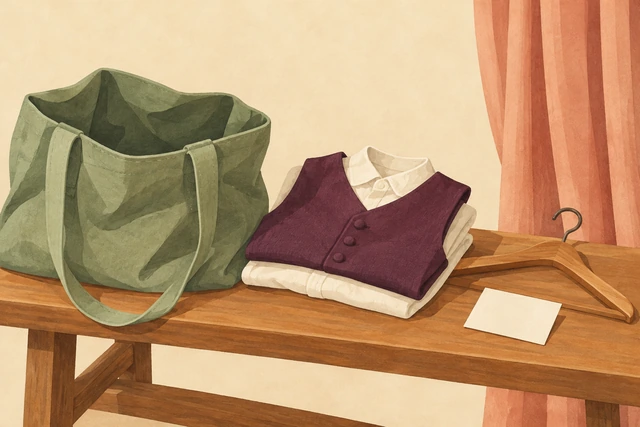
Beside each borrowed piece, note who owns it, who receives it for the performance and the agreed return arrangements. For your own pieces, record who takes them home. If an item moves from one role to another, include that handover too.
After use, compare the collected items with the list and tell the responsible person if something is missing or a problem has been noticed. For any care before returning an item, follow its instructions and the arrangements agreed with its owner. Do not assume one care process applies to every material.
The role, scene and change worksheet
At the top, write the role and the date of your latest discussion. Add a row for each entrance that needs recording. The blanks are for your agreed plan, not ready-made performance instructions.
| Scene or agreed cue | Pieces worn on entrance | What changes |
|---|---|---|
| __________ | __________ | __________ |
| __________ | __________ | __________ |
Use the same scene reference in the second table to connect the outfit with the agreed handovers.
| Scene or cue | Agreed location and helper | Item to return and recipient |
|---|---|---|
| __________ | __________ | __________ |
| __________ | __________ | __________ |
Use “not needed” only when that has been established. For an unknown detail, write “to clarify” and note who will answer. A blank space should not look like a completed agreement.
Complete the worksheet for your child’s role and review it with the person leading the production before finalising the pieces and changes.