Article contents
Start with the invitation’s exact words
Read the whole part about clothing, including any clarification in the same message. Copy it as written before turning it into your own description. “Wear purple” and “add something purple if you like” do not give the same instruction.
Keep your own ideas separate. A picture that reminds you of the theme can provide inspiration, but it does not automatically add a requirement to the invitation. If an image shows a hat and the wording does not explain its role, do not immediately put it on a compulsory-items list.
The aim is to be able to point to the exact phrase behind each choice. Where you need to supply your own interpretation, mark that as an open question.
Separate the theme from specific requirements
The theme gives your costume a creative direction. A specific instruction might require a colour or a particular element, while an optional suggestion leaves that addition up to you. These distinctions need support from the invitation’s actual words.
Here is how three phrases work in a hypothetical message:
| Exact phrase | Meaning in this example | Choice |
|---|---|---|
| “Theme: travellers beneath the stars” | The creative direction | Imagine a fictional traveller |
| “At least one visible purple garment” | A specific requirement | Choose a purple top or cape |
| “A star accessory is optional” | An addition you can leave out | Decide whether you want a star |
In this example, a purple accessory alone does not fulfil the word “garment”. That distinction comes from this wording, rather than a general rule for every party.
Find the ambiguity that would change your outfit
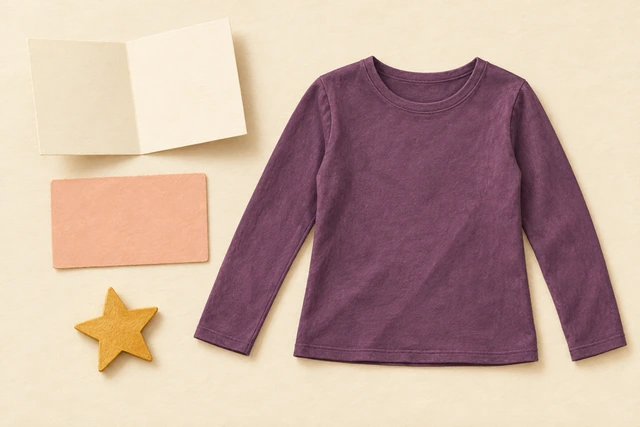
A phrase such as “a touch of purple” does not, by itself, explain whether a small accessory is enough or a purple garment is wanted. If you are considering only a purple bracelet, that difference is worth clarifying before you finalise the look.
By contrast, if the invitation clearly says the star is optional, you do not need to ask whether you can leave it out. The wording has already answered that question.
Focus on what affects your actual idea. Avoid building a long list of possible rules that the invitation never mentions. You will then get an answer that helps with the choice you are making.
Ask one question with a concrete answer
Connect the phrase in the invitation to the item you are thinking of wearing. For the ambiguous “a touch of purple”, a specific question is:
“When you say ‘a touch of purple’, is a purple bracelet enough, or do you want at least one purple garment?”
The question identifies the wording that needs clarification and offers two clear interpretations. For this decision, it is more useful than a general “what should I wear?”.
Keep the answer beside the original phrase and change only the part of your plan it affects. Until you have an answer, leave that point open. You can still choose the other pieces that do not depend on it.
One invitation, two different looks
Hypothetical example — the full clothing instructions:
“For our costume party, the theme is travellers beneath the stars. Choose your own fictional role. Wear at least one visible purple garment. Other colours are up to you. A star accessory is optional.”
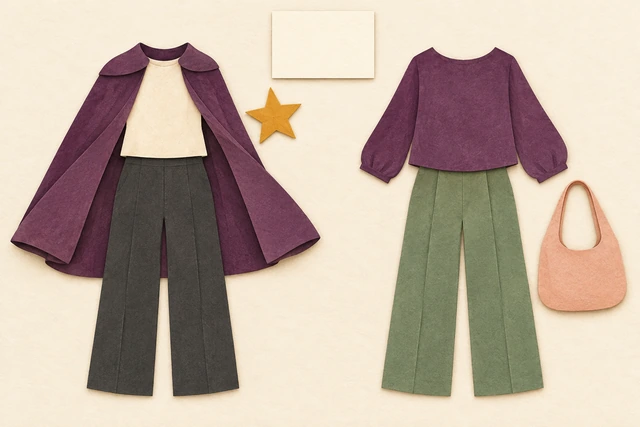
With this wording, you could plan two different versions:
| Detail | Star storyteller | Night traveller |
|---|---|---|
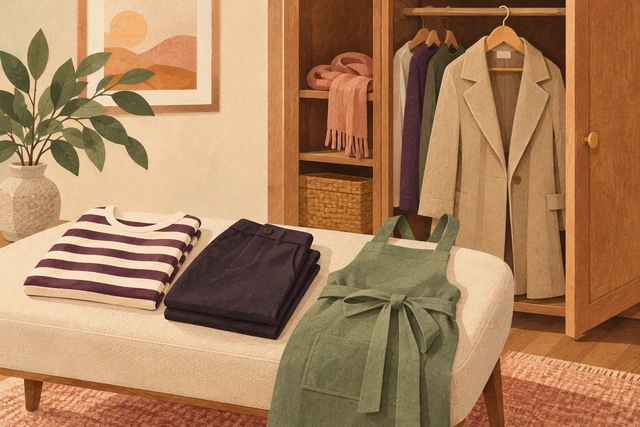
| Visible purple garment | Purple cape | Purple top |
| Other pieces | Cream top, dark trousers | Green trousers, plain bag |
| Optional star | Decorative star held in the hand | No star |
| Connection to the theme | Tells stories on a journey beneath the stars | Travels through an imaginary night-time world |
Both versions follow the example’s explicit requirements: a purple garment and a chosen role within the theme. The second does not need the star because it has been described as optional. The bag is a creative choice for that particular look, not something the invitation requires.
Choose the version you enjoy and check which pieces you actually have available. You can change the freely chosen details while keeping the required element.
Turn your invitation into a personal planning card
Use this card for your own invitation. Put the message’s actual words in the first column rather than your first impression. In the last column, write a specific item or the question still to be answered.
| Exact phrase | Meaning for this look | Choice or question |
|---|---|---|
| Theme: ______ | Role I am considering: ______ | Basic idea: ______ |
| Explicit requirement: ______ | What needs to be visible: ______ | Item that fulfils it: ______ |
| Optional detail: ______ | Include it or leave it out: ______ | Decision: ______ |
| Unclear phrase, if any: ______ | What it changes in my choice: ______ | One specific question: ______ |
Finish this sentence: “I will come as ___, using ___ for the explicit requirement and ___ as my own choice.” If something remains unclear, keep that part provisional.
Fill in the card with your invitation and choose a look based on the points it makes clear.