
Article contents
Set a departure time, not just the party time
The time the party starts is not the time until which you can keep getting ready. Work out when you need to leave for your own journey and write it down. If that is still unclear, settle this practical detail first.
The remaining time also includes things you would do anyway: getting dressed, gathering your essentials and preparing to go out. Separate that time from what you can spend searching for pieces or changing the outfit.
Choose a point when additions stop and final preparation begins. Set it from your own schedule; there is no single duration that works for everyone. The departure time is the boundary for the plan, rather than something you keep moving to accommodate another idea.
Count only pieces that are ready now
Open the wardrobe with a specific aim: find a few pieces you can use now. Put them together so you can see the whole look, including shoes and any bag you need.
A garment you cannot find or an accessory someone has promised but has not brought over is not yet part of the ready outfit. The same applies to a piece that needs work you have not allowed for in the available time.
If something needs searching for, give that search a clear stopping point. When you reach it, continue with the confirmed pieces. This prevents “Maybe it’s in the other drawer” from repeatedly pushing back your departure.
Choose one idea that reads through a few details
With the ready pieces in front of you, choose a simple direction that fits the invitation. It might rest on a scarf, a colour combination or one distinctive garment. The idea needs to work with what is there, without waiting for another discovery.
Describe it in one sentence. If making it work means continually adding new elements, simplify it before you start getting ready. When the invitation asks for a specific detail you do not have, clarify whether the version you can complete is acceptable.
Try the selected pieces together. The purpose is to decide what you will wear and close the choice, rather than begin another round of possibilities. A simple decision you can carry through gives you a usable plan for leaving.

Prepare a fallback that is not waiting for anything
Your fallback is a complete outfit made from confirmed pieces. It can be the same look without an optional hat, or with another item you already own. Specify exactly what changes and check that it does not create another missing piece.
Tie the switch to a clear event: “If I haven’t found the hat when outfit selection ends, I’m going with the scarf.” “I’ll decide later” leaves the same search running.
If the alternative needs a purchase, a collection or a borrowed piece that has not arrived, it is still an open task. For this outing, keep a version you can already complete using what you know about the invitation.
A hypothetical plan for a retro evening
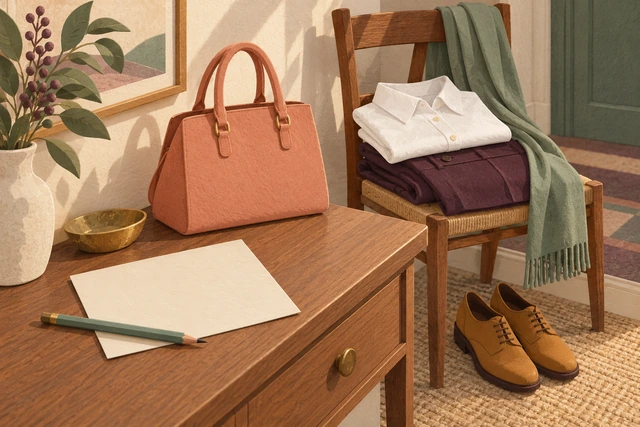
Suppose it is 18:40 and you have decided to leave at 19:20. The invitation is for a retro evening, and the host has clarified that one themed detail is enough. You have a white shirt, dark trousers, shoes, a bag and a scarf ready. You are also considering a hat, but cannot find it.
The schedule below is only an example of a personal time allocation:
| Planning point | What I do | Decision |
|---|---|---|
| By 18:50 | Gather the ready pieces. | Leave out the hat if it is still missing. |
| By 19:00 | Try the shirt, trousers, shoes and scarf together. | Settle the outfit. |
| By 19:10 | Get dressed and gather essentials. | Add no further elements. |
| Before leaving at 19:20 | Finish my usual preparations for going out. | Leave in the ready outfit. |
The version without the hat is already complete. If trying everything on takes longer, drop an optional change instead of treating the delay as extra time becoming available. These times illustrate the decisions; your own card should use your actual departure and tasks.
Write your own plan for getting out the door
At the top, note the current time, your actual departure and when changes stop. Fill the rows with your own steps and the decision that will apply if something remains unresolved.
| Step and personal time limit | What needs to be ready | Decision if something is missing |
|---|---|---|
| … | … | … |
| … | … | … |
| … | … | … |
The useful outcome is knowing what you will wear when it is time to leave. Once that decision is settled, save additional ideas for another invitation.
Your next step: complete the card with your own departure time and name the complete outfit you will leave in if nothing else is added.