Article contents
Let each person choose who they want to be
Ask each family member “Which role would you like in this story?” and “How much would you like to dress up?”. One person may want a distinctive outfit, another a single characteristic piece and another no costume at all. Record these choices before allocating clothes or accessories.
Avoid assigning roles automatically by age or gender. A child can suggest their role and leave out what they do not want to wear. If two people choose the same idea, they can be two different characters within the story. Nobody needs to be persuaded to take the leftover role.
Find one detail that connects your choices
Look for a colour, pattern or shape already present in the pieces each person chose. It might be green in an apron, a cardigan and a pair of trousers. The shared detail does not need to appear in the same place or cover the same amount of each outfit.
Lay the selected pieces together and see whether you like them as a group. If the shared detail requires changes nobody wants, choose a different connection or keep just the common story. Note who owns each garment, especially when more than one person wants to use the same available piece.
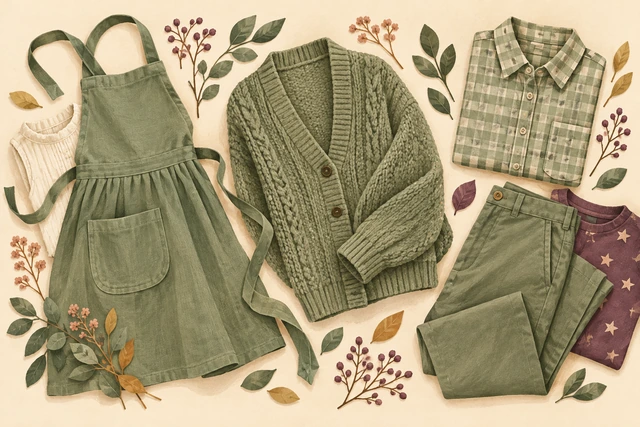
An example: a village celebrates under the stars
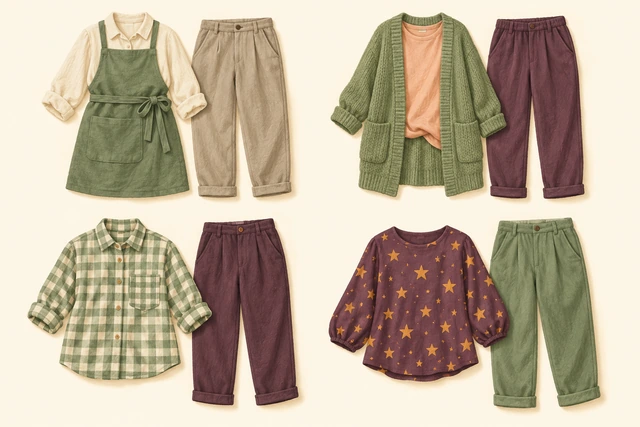
In this hypothetical example, four family members each choose a different role. Assume the particular clothes are already available and that they want to wear them:
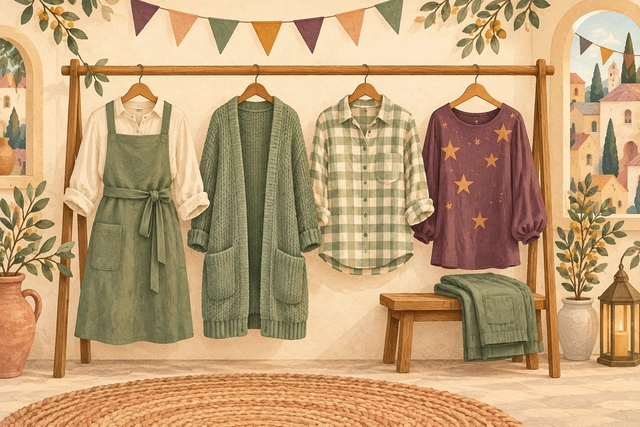
- Gardener: a plain shirt with a green apron.
- Storyteller: a long green knitted cardigan over everyday clothes.
- Celebration musician: a green checked shirt with dark trousers.
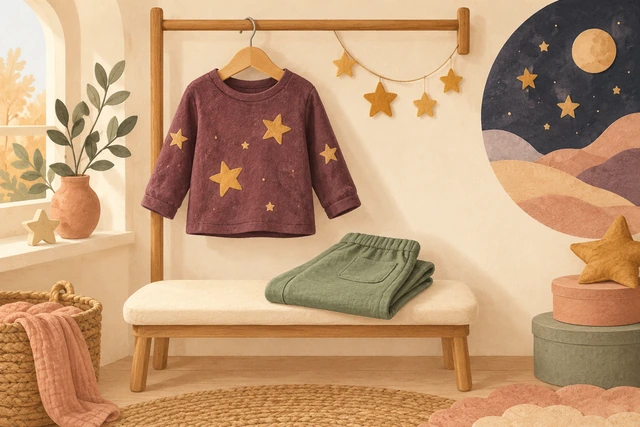
- Stargazer: a star-patterned top with green trousers.
Green connects the outfits, and the shared story gives everyone a place in the imaginary celebration. The gardener tends the garden, the storyteller shares stories, the musician joins the celebration and the stargazer watches the stars. You can explain the idea with this little story without adding a musical instrument or another object.
When a role or a piece is missing
If nobody wants a role, remove it from the story or leave it as an imaginary character who does not appear. If a defining garment is missing, ask whether the person would prefer another available piece or a different role. Keep confirmed choices separate from items you are still looking for.
In the example, if the storyteller decides against the long cardigan, they can keep the role in their everyday clothes. A shared idea does not require four matching outfits. If two roles need the same garment at the same time, agree one use and reconsider the other outfit.
Your family role card
Above the table, write the shared story and, if you have chosen one, the connecting colour or motif. For each person, record their preferred role or way of taking part. In the last column, name the exact available piece or one specific unresolved step.
| Person | Preferred role or participation | Available piece / next step |
|---|---|---|
| __________ | __________ | __________ |
| __________ | __________ | __________ |
| __________ | __________ | __________ |
| __________ | __________ | __________ |
The completed card should show a shared story, individual choices and a clear allocation of clothes. If a preference changes, update that row and any others it affects.
Complete the card together and keep the version of the family theme that each person wants to take part in.