Article contents
Start with two individual preferences
Before suggesting “we should both dress as…”, write down one thing you each want and one thing you do not want to wear. This gives both people a starting point before the first suggestion becomes the assumed plan. The process works for partners or two friends.
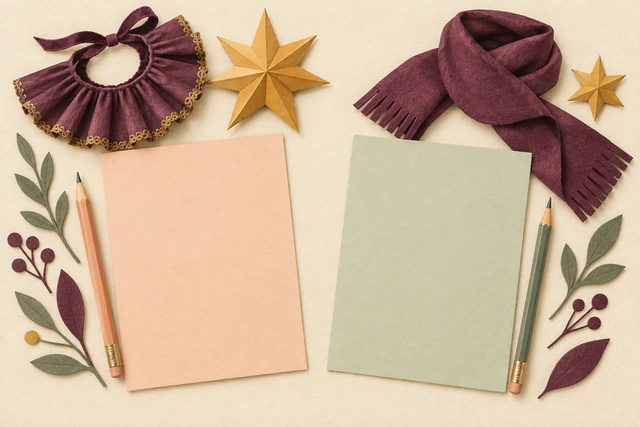
Use two columns and read them together:
| Person A | Person B |
|---|---|
| Something I definitely want: ______ | Something I definitely want: ______ |
| Something I will not wear: ______ | Something I will not wear: ______ |
| Something I would like, but can change: ______ | Something I would like, but can change: ______ |
Be specific: “I want a striking shape” and “I do not want anything on my head” give you more to work with than “something nice”. Do not assign roles by gender or by who usually organises your outings.
Keep spending and preparation limits separate
Each person decides what they want to put into their own look: money, time, steps and help. The two limits do not have to be equal. If a limit is private, you can simply say whether a suggestion fits it; sharing an amount is not necessary.
Do not assume that the person proposing the more elaborate theme will prepare both costumes. If you plan a shared purchase or something to make together, agree who will do what before including it in the plan. “I want only a few steps and to get ready without help” is as specific a preference as “I want to spend time on lots of details”.
Test the idea with two different descriptions
Write one sentence for each look. Each sentence should include the person's own idea and the element that connects it to the other look.
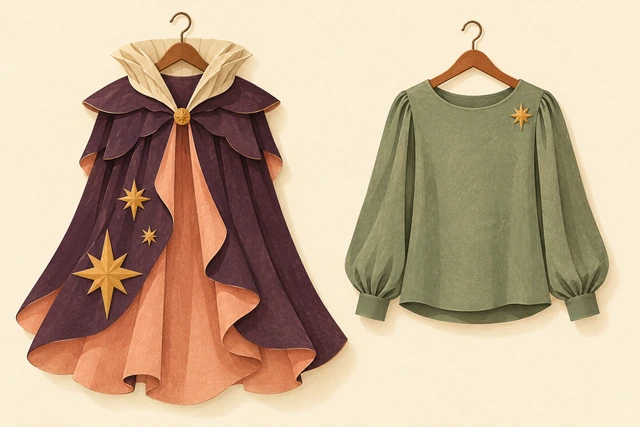
An imagined example: one person wants a dramatic space-inspired transformation. The other wants something understated, with no headwear and little preparation. Their shared theme could be “a journey among the stars”: one theatrical space look and one simple look with a small star detail. Stars connect the ideas without requiring the same pieces.
These are planning descriptions, not recommendations for products in stock. Later, check separately whether each actual costume meets the requirements of the person who will wear it. A shared theme does not make the two sets of practical needs identical.
What if the shared idea only suits one person?
When a suggestion conflicts with something the other person does not want, change the connection instead of pressing for an exception. If only one person likes the space theme, a shared colour might leave room for two completely different ideas.
Keep two possible connections and test both with the same questions: do we both want this? Does it respect the things we ruled out? Does it fit our individual spending and preparation limits? A “no” is a reason to adapt or set aside that suggestion.
If you cannot find a connection that suits you both, choose independent costumes. Going to the same event does not oblige you to appear as a themed duo.
Put your shared plan on one sheet
Copy these two columns and fill them in before looking for specific costumes. Names are not needed.
| My look | Your look |
|---|---|
| Personal idea: ______ | Personal idea: ______ |
| Detail I definitely want to keep: ______ | Detail you definitely want to keep: ______ |
| Feature I rule out: ______ | Feature you rule out: ______ |
| Spending limit for my choice: ______ | Spending limit for your choice: ______ |
| Preparation and help I accept: ______ | Preparation and help you accept: ______ |
Underneath, write: “Our connection is ___, while the first look will be ___ and the second will be ___.” If there is a shared task or purchase, add who is responsible and how it will be divided.
Each person should read their own description. If it needs a change, revise it before choosing products. The sheet sets your shared direction; size, package contents and actual fit need checking for each costume.
Fill in the sheet together and keep the one sentence you both want to follow.