Article contents
What does your child love about the idea?
Ask “What do you like most about this role?” and listen to your child’s description. They might name a colour, the shape of a garment or something the imaginary character does. Note the detail they want to keep rather than beginning with a complete picture they must copy.
“I don’t want a mask” can remain a clear preference without needing an explanation from you. Do not make participation in the party depend on agreeing to wear it. Discuss which version of the idea interests your child with their face uncovered.
Which pieces are genuinely optional?
Check the description and instructions for the particular costume. Here, the subject is a separate decorative mask described as optional, not the removal of integral parts. If the intended use of the outfit is unclear, ask for clarification before basing your choice on leaving a piece out.
When the mask is built into the design, choose a different design instead of adapting the existing one. For each other separate accessory, ask whether your child wants to use it. Being willing to wear the main garment does not mean they have also chosen a hat, gloves or something to carry.
Colour, shape and a distinctive detail
Turn the preference into features you can check in the available clothes. If your child likes an imaginary star-themed role, first look for a garment you already have with a relevant pattern or a colour that suggests the idea to them. Do not list a design or symbol as available before actually finding it.
The shape of an outer garment or a pattern on the main piece can become the focus of your interpretation. There is no need to add many different signals at once. Explore which element gives your child a sense of the role without requiring their face to be covered.
Try the version your child chooses
Present the available pieces separately and begin the combination with those your child wants. If they would like to try the outfit, ask what they would keep and what they would leave out. A detail they liked in a picture may turn out to be something they do not want to wear.
Keep an agreed alternative, such as the main garment without an optional accessory. If that no longer appeals either, return to another idea. Where a school event has a specified theme or outfit, confirm the alternative with the organiser instead of assuming it has been approved.
An example: a traveller among the stars
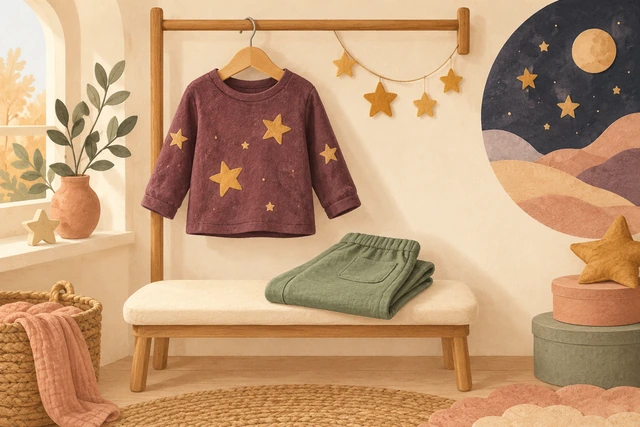
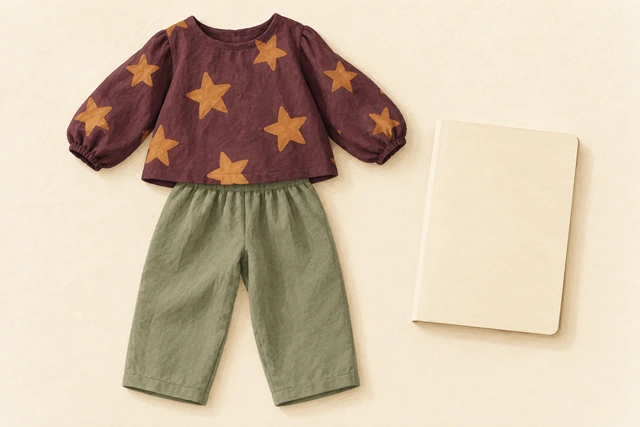
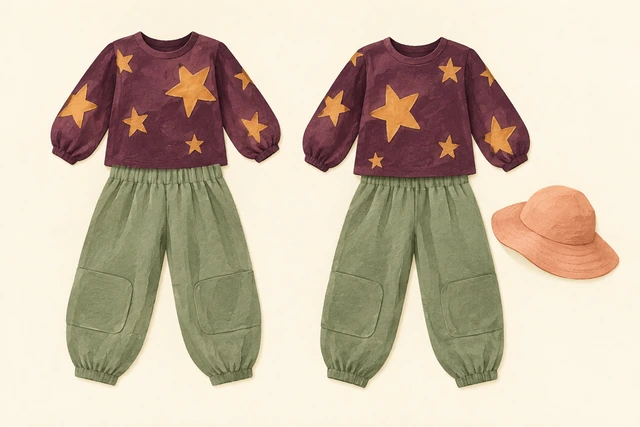
Imagine a child who wants to be a “star traveller”. They like dark purple and stars but do not want a mask. In this hypothetical example, there is already a star-patterned top and a pair of plain trousers the child wants to wear. Those can form their interpretation of the idea.
A separate hat, if available, is considered only if the child wants it. The outfit based on the top remains an option on its own. If someone does not immediately recognise the imaginary role, the child can share the name they chose; a mask does not need to be added to justify the idea.
The “I like — I choose” worksheet
Write down your child’s preferences together, then add the pieces you actually have or are considering. In the last column, enter “want”, “don’t want” or “needs clarification”, with a short note where needed.
| What I like about the role | Available piece or idea to check | Our choice |
|---|---|---|
| Colour: __________ | __________ | __________ |
| Garment shape: __________ | __________ | __________ |
| Distinctive detail: __________ | __________ | __________ |
| Another element: __________ | __________ | __________ |
Below the table, note the version you have agreed on and any question about how an item is used. This keeps your child’s choice separate from information still to be confirmed.
Complete the worksheet with your child and put together the version of the role they want to wear without a mask.