Article contents
Read tomorrow’s invitation again
Open the message for this particular event and keep the details that affect the chosen look: the theme, explicit clothing requirements and any instructions about items to bring. Check for a later clarification too.
Compare those points with the set you are preparing. Do not add requirements remembered from a different party. If something is unclear and changes what your child would take, note the precise question for the organiser.
This evening check is about the actual outfit for tomorrow. You do not need to rebuild the whole preparation schedule.
Confirm the choice with your child
Show your child the selected pieces and ask simply: “Do you want to wear this outfit tomorrow? Is there anything here you don’t want to take?” Keep the conversation about the items in front of you rather than an endless search for new ideas.
If your child no longer wants an optional accessory, look together at the outfit without it. If the main choice itself is no longer wanted, identify another available version your child would like and check it against the invitation.
Record the version you agree on. The morning set can then match that conversation rather than include an extra detail added later without your child’s involvement.
Gather the entire actual set
Bring together the specific clothes and accessories you have chosen. Check each against the plan: top, bottom or main garment, and any other agreed pieces. “Somewhere in the house” is not yet the same as “here”.
Separate what will be worn before leaving from what will be carried. For anything staying elsewhere, write down its exact location, such as “cardigan on the hanger beside the bag”. You do not need to squeeze everything into one bag just to make it look gathered.
If an item in the original idea was borrowed, confirm that it is actually available for tomorrow. An old photo of the outfit is not enough to establish that all its pieces are present.
Separate ready items from unfinished tasks
Give each piece a clear status: ready in its place, awaiting a specific action, or left out of the agreed version. Beside each unfinished task, name the person handling it and when they will provide the answer you need.
If an accessory is missing and the invitation explicitly makes it optional, you can agree on the complete look without it. Avoid leaving the morning plan dependent on “perhaps it will turn up”. If an explicitly required item is missing, simply leaving it out does not resolve the issue: you need a confirmed alternative or clarification.
The result is a specific set for tomorrow and, if anything remains open, a visible action with someone responsible for it.
Example: the woodland librarian
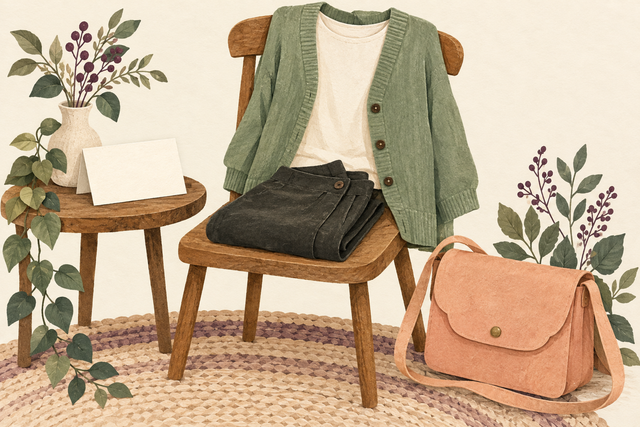
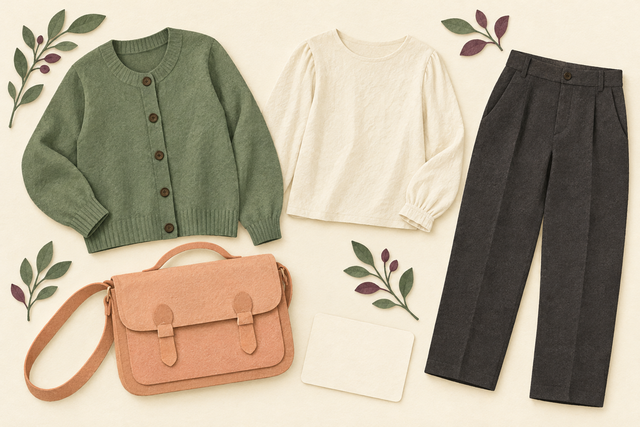
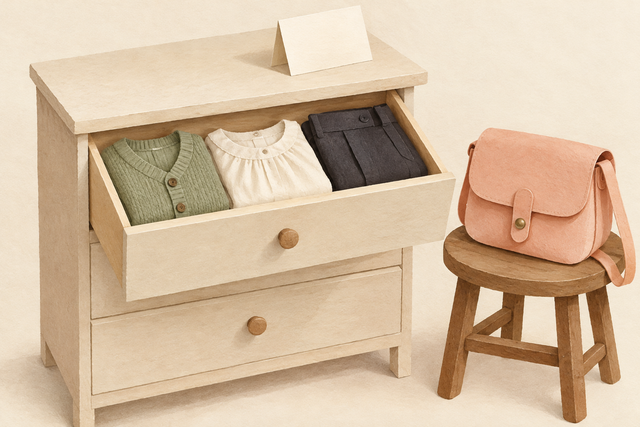
Hypothetical example: the invitation asks for a fictional role and explicitly says accompanying props are optional. Your child has chosen a woodland librarian: sage cardigan, cream top, dark trousers and a plain peach satchel. You also considered a storybook with a plain cover, but it cannot be found.
Your child wants to keep the role without the book. Because that follows this invitation’s actual wording, the evening decision is the whole outfit using the four available pieces. The book comes off tomorrow’s list.
| Piece | Evening decision | Location for tomorrow |
|---|---|---|
| Cardigan, top, trousers | Together; to be worn before leaving | Together in the top drawer |
| Plain satchel | Included in the agreed look | Beside the drawer |
| Storybook | Left out, as agreed | Not something to search for in the morning |
The handover can be this specific: “The three garments are in the top drawer and the satchel is beside it. Tomorrow’s version has no book.” If someone else is handling departure, give them this information and make clear who owns any task still outstanding.
A small card for the next morning
First write the agreed outfit in one line: “Tomorrow, these pieces will be worn: ___; these will be carried: ___.” Add one row for each item or group stored together.
| Piece and status | Exact location | Action and person responsible |
|---|---|---|
| ______ / ready or pending | ______ | What: ______ · Who: ______ |
| ______ / ready or pending | ______ | What: ______ · Who: ______ |
| Agreed version without: ______ | Remaining set: ______ | Person to inform: ______ |
Below the card, note who hands over the set: ___, to whom: ___, when: ___. If the same person prepares and takes the items, their own morning action is enough. For an unfinished task, add when it will be checked again.
Fill in the card, put the agreed pieces in their recorded places and pass the information to the person handling tomorrow’s departure.